
Wallpaper Behind TV: Ideas for a Stylish TV Feature Wall
The television is often one of the most noticeable elements in a living room. Even when it is switched off, a large dark screen naturally attracts attention, especially when it is mounted in the center of a wall. This is why the wall behind the TV deserves just as much thought as the sofa, lighting, shelving or other furniture in the room.
A carefully chosen wallpaper behind the TV can turn an otherwise empty wall into a complete feature. It can add texture, introduce color, create visual depth or simply help the television feel more integrated into the interior. The important part is choosing a design that works with the screen rather than competing with it.
From subtle stone and concrete effects to panoramic landscapes and modern 3D designs, there are many ways to create a TV feature wall. The right choice depends on the size of the room, the furniture, the amount of natural light and how dominant you want the TV wall to be.
Why Use Wallpaper Behind a TV?
Leaving the wall behind a television completely plain is not necessarily wrong. In a very minimal interior, it can work perfectly well. However, in many living rooms the result can feel unfinished, especially when a wall-mounted television is surrounded by a large amount of unused wall space.
Wallpaper gives you a way to treat the entire TV area as part of the interior design rather than treating the television as a separate electronic object placed against the wall.
A TV wall wallpaper can be used to:
- Create a clear focal point in the living room.
- Add texture to an otherwise plain wall.
- Introduce colors that connect the TV area with the sofa, rug and furniture.
- Create a feeling of depth on a flat wall.
- Make a large television look more integrated into the room.
- Give character to a simple media unit or floating TV cabinet.
- Transform an empty wall without adding bulky furniture or decorative objects.
This approach works particularly well with modern flat-screen televisions. Older LCD and plasma televisions were often placed inside large entertainment units, but modern LED and OLED screens are much slimmer and are frequently wall mounted. As furniture becomes lighter and simpler, the wall itself becomes a more important part of the composition.

What Type of Wallpaper Works Best Behind a TV?
There is no single design that works in every room. A successful TV feature wall depends more on balance than on following a particular trend. The wallpaper should be interesting enough to improve the wall, but it should not make watching television uncomfortable.
1. Subtle Textures for a Calm TV Wall
Stone, concrete, plaster, wood and soft architectural textures are among the easiest designs to use behind a television. They create visual interest without filling the wall with many small details.
These designs work especially well in modern, industrial and minimalist living rooms. Gray concrete effects can complement black television screens, while warm stone or wood tones can soften a room with neutral furniture.
If the rest of your living room already contains strong colors or decorative objects, a subtle textured wallpaper is often the safest choice.
2. 3D Wallpaper for Extra Visual Depth
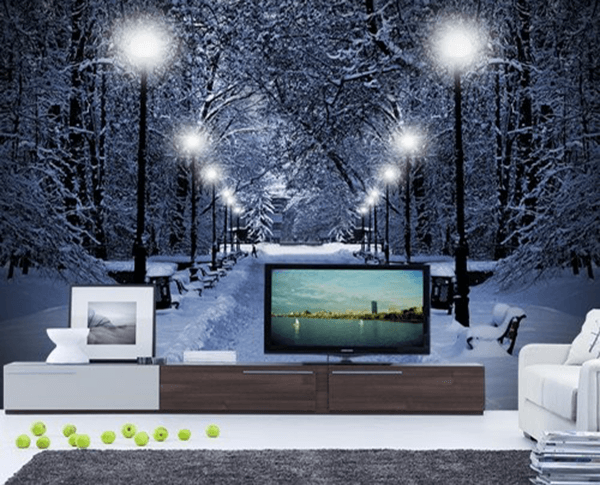
A flat TV wall does not have to look flat. Designs based on perspective, shadows, architectural openings, tunnels, geometric forms or distant views can create an optical sense of depth.
This is particularly useful in smaller living rooms where a strong perspective can make the wall appear visually deeper. It is important to understand that this type of 3D wallpaper creates its effect through the printed image. It is not a physically raised wall panel.
For a TV wall, designs with depth near the outer areas of the image can work especially well because the television will naturally cover part of the center. A good composition should still make sense after the screen is placed in front of it.
3. Nature and Landscape Murals
Nature wallpaper can create a much softer atmosphere around a television. Forests, mountains, misty landscapes, tropical leaves and panoramic scenery work well when the room needs more color or a stronger connection with natural elements.
For a TV wall, it is usually better to choose an image without an important subject exactly in the center. If the main tree, building, animal or other focal point is positioned behind the television, much of the visual impact can be lost.
A more panoramic composition gives you greater flexibility because the image can continue naturally around the screen.
4. Abstract and Geometric Wallpaper
Abstract designs are a good option for contemporary interiors because they do not depend on a specific scene or subject. Lines, shapes, soft color transitions and large geometric forms can frame a television without making the wall look too busy.
Large-scale patterns generally work better than very small repeating patterns behind a large screen. A pattern with hundreds of small contrasting details may become visually tiring when you are trying to focus on the television.
5. Dark Wallpaper Behind a TV
Dark wallpaper can be particularly effective behind a television because the black screen blends more naturally into the background. Deep gray, charcoal, dark blue, dark green and muted black designs can create a sophisticated media wall.
This does not mean every TV wall should be dark. In a small room with little daylight, covering a large wall in very dark colors can make the space feel heavier. The final choice should take the overall room into account.
How to Choose the Right TV Wall Wallpaper
Choosing wallpaper from a small image on a screen is very different from seeing that design across an entire wall. Scale, contrast and composition become much more important once the mural is several meters wide.
| Your Goal | Good Wallpaper Choices | What to Be Careful With |
|---|---|---|
| Create a calm TV area | Concrete, stone, wood, soft abstract designs | Very small or high-contrast patterns |
| Make the wall feel deeper | 3D perspective, arches, landscapes, architectural views | Important details hidden directly behind the TV |
| Create a dramatic feature wall | Dark murals, large-scale art, strong geometric designs | Too many competing colors and decorative objects |
| Make the room feel natural | Forest, botanical, mountain and landscape murals | Images with a central focal point covered by the screen |
| Keep a modern minimalist look | Neutral textures, simple lines, restrained color palettes | Overly decorative or complicated scenes |
Should the Wallpaper Cover the Whole TV Wall?
In most rooms, covering the entire wall creates the most complete result. The television then becomes part of a larger composition rather than appearing to sit inside a small decorative rectangle.
A full-wall mural is particularly suitable for panoramic images, large 3D designs and architectural effects. It also removes the need to decide where a smaller wallpaper section should begin and end.
However, a smaller area can also work. For example, wallpaper can be used behind a floating media unit, inside an architectural recess or within a framed section of the wall. This can be useful when the TV wall contains doors, built-in shelves or other elements that make a full-width mural impractical.
Full Wall vs. Smaller Wallpaper Panel
A full wall usually gives a more seamless, premium appearance. A smaller section behaves more like artwork or a decorative panel. Neither option is automatically better, but they create very different results.
If your goal is to create a genuine TV feature wall, full-wall coverage is generally the stronger option. If the wallpaper is only intended to add a small accent, a limited section may be enough.
Think About the Television Before Choosing the Image
One of the most common mistakes when choosing a wall mural for a TV area is selecting the image first and thinking about the television later.
The television will cover a significant part of the mural. A 55-inch, 65-inch or 75-inch screen can hide a large central area, so image composition matters.
Avoid Hiding the Main Subject
Imagine choosing a beautiful city mural where the most important building sits exactly in the middle. Once the television is mounted, the building may disappear completely.
The same problem can occur with portraits, animals, trees, windows and other designs that have one obvious central subject.
For TV walls, look for images that remain attractive even when part of the center is covered. Landscapes, textures, abstract compositions and designs with visual interest on both sides of the television are often easier to work with.
Consider the Height of the Screen
The height of the television also changes how much of the wallpaper remains visible. If a low media cabinet is combined with a large wall-mounted screen, the wallpaper may be most visible above the television and on both sides.
This means the upper section of the design should not be treated as an afterthought. Clouds, foliage, architectural detail or other visual elements in the upper part of the mural can help create a more balanced result.


Match the Wallpaper with Your TV Unit and Furniture
The wallpaper should not be chosen in isolation. Look at the complete wall, including the television, media cabinet, speakers, shelves, lamps and nearby furniture.
With a Floating TV Unit
Floating cabinets create a clean modern look and leave more wallpaper visible. They work particularly well with full-wall murals because there are fewer objects interrupting the design.
Neutral wood finishes combine well with nature, stone and botanical designs. White or black floating units can work with almost any style, although the contrast of the entire wall should still be considered.
With Shelves or Built-In Storage
If shelves surround the television, the wallpaper will already be competing with books, decorative objects and furniture lines. In this situation, a calmer wallpaper is often more successful than a complicated photographic scene.
Texture can be more useful than detail. A concrete, stone, plaster or understated abstract design can give the wall character without making the arrangement feel crowded.
With Minimal Furniture
If the TV wall contains little more than the screen and a simple cabinet, you have much more freedom. A dramatic panoramic mural or a strong 3D design can become the main decorative element in the room.
You can explore our wider collection of wallpaper for home interiors to compare different themes and see which style works best with your furniture.
Color Matters More Than You Might Expect
A television is essentially a large black or very dark rectangle when it is switched off. The color surrounding it changes how strongly that shape stands out.
On a completely white wall, the contrast is very high. On a medium or dark wallpaper, the television tends to blend into the wall more naturally.
This is why muted gray, beige, taupe, dark green, blue and earthy colors are popular choices for TV feature walls. They create enough distinction to make the wall interesting without making the television look disconnected from its surroundings.
That said, light wallpaper can also work beautifully. If your room is small, Scandinavian or naturally dark, a light mural may keep the space feeling more open. The goal is not to hide the television at all costs. It is to make the entire wall feel intentional.
Lighting and Wallpaper Behind the TV
Lighting can completely change the appearance of a TV wall. Natural daylight, ceiling lights and LED backlighting can all affect the colors and contrast of the wallpaper.
Natural Light
If the wall receives strong daylight, very dark designs may appear lighter during the day and much more dramatic at night. Consider how the room is used at different times rather than judging the wallpaper under one lighting condition.
LED Backlighting
Some wall-mounted televisions use LED lighting behind the screen. A relatively calm wallpaper usually works better with this setup because the changing light already adds another visual element.
Strong patterns combined with colorful backlighting can become distracting. If ambient lighting is an important part of your media setup, keep the wallpaper slightly more restrained.
Can You Use a Custom Photo Behind the TV?
Yes. A TV feature wall does not have to use an existing wallpaper design. A personal photograph, illustration or graphic can also be turned into a wall mural, provided that the source image has enough quality for the required print size.
This can work particularly well with panoramic landscape photography, travel photos, abstract digital art or architectural images.
The same composition rule still applies. Avoid placing the most important part of your photograph directly behind the television. Ideally, the image should have enough usable detail on both sides and above the screen.
If you already have a suitable image, you can use the create your own photo wallpaper option and have the design prepared according to the dimensions of your wall.
Made-to-Measure Wallpaper Is Useful for TV Feature Walls
TV walls vary greatly in size. Some are narrow walls in apartments, while others extend across large open-plan living rooms. Fixed-size wallpaper can therefore create unnecessary cutting or make it difficult to position the image properly.
With made-to-measure wallpaper, the mural can be produced according to the width and height of the actual wall. This is especially valuable with photographic and 3D designs because the image can be adapted to the proportions of the space.
Before ordering, measure the complete area carefully. Do not simply measure the television or the media cabinet. The important dimensions are the width and height of the section of wall that will actually be covered.
You can find more information about measuring, sizing and ordering in our how wallpaper ordering works guide.
Installing Wallpaper Behind a Wall-Mounted TV
If possible, wallpaper should be installed before the television is mounted. This makes it easier to create a clean uninterrupted surface and reduces the amount of cutting required around brackets and cables.
If the television is already installed, it is usually better to remove the screen from the wall while the wallpaper is being applied. The mounting bracket can then be dealt with according to the installation setup.
Always follow the instructions supplied with your television and wall mount, particularly for mounting points, ventilation and cable placement. Wallpaper should never obstruct ventilation openings or interfere with the secure installation of the television.
Prepare the Wall Properly
The wall should be clean, smooth and dry before installation. Small imperfections can become more visible underneath a large photographic mural, especially in areas with strong side lighting.
Taking time to prepare the wall properly usually has a greater effect on the finished appearance than trying to correct problems after the wallpaper has been installed.
Common Mistakes When Decorating a TV Wall
Choosing a Design That Is Too Busy
A wallpaper can look impressive on its own but become overwhelming when combined with a television, speakers, shelves and furniture. Remember that the TV wall is already a visually active part of the room.
Ignoring the Position of the Television
Do not choose a mural without considering which parts will disappear behind the screen. Always imagine the television as a large rectangle placed over the image.
Using Too Many Competing Materials
Stone-effect wallpaper, wood panels, metallic shelves, colorful LED lights and decorative objects can each look attractive individually, but using all of them on one wall can produce a confused result.
Choose one main visual idea and let the other elements support it.
Choosing Wallpaper Only Because It Is Trendy
A feature wall occupies a large area of the room. It is better to choose a design you genuinely enjoy and that works with your existing interior rather than selecting something simply because it is currently fashionable.
TV Wall Wallpaper Ideas for Different Interior Styles
Modern Living Room
Try concrete effects, geometric forms, architectural 3D designs or restrained abstract murals. Keep the color palette connected with the furniture and flooring.
Minimalist Living Room
Choose soft stone, plaster, neutral textures or very simple abstract designs. The wallpaper should add depth without becoming the first thing you notice.
Natural and Scandinavian Interior
Forest scenes, botanical elements, soft landscapes, wood effects and earthy colors can work well with light wood furniture and neutral fabrics.
Industrial Interior
Brick, concrete, aged wall textures and darker architectural imagery are natural choices. They combine particularly well with black screens, metal details and simple media cabinets.
Luxury or Contemporary Interior
Large-scale marble effects, elegant abstract art, dark architectural murals and carefully selected panoramic imagery can create a sophisticated TV feature wall without requiring additional decoration.
Frequently Asked Questions About Wallpaper Behind a TV
Is wallpaper behind a TV a good idea?
Yes. Wallpaper can turn the TV wall into a deliberate feature, add texture and help the television fit more naturally into the room. The key is choosing a design with the right scale, contrast and composition.
What wallpaper is best behind a television?
There is no single best design, but subtle textures, large abstract patterns, landscapes and 3D depth-effect murals tend to work well. Avoid designs where an important central subject will be completely hidden by the screen.
Should TV wall wallpaper be dark or light?
Both can work. Dark wallpaper helps a black television blend into the wall, while lighter wallpaper can make a small or dark room feel more open. Consider the size of the room and the amount of natural light.
Can I use 3D wallpaper behind a TV?
Yes. 3D wallpaper can create an effective sense of depth around a television, especially on a large feature wall. Perspective-based designs are particularly suitable when their main visual effect remains visible around the screen.
Should I wallpaper the entire wall behind my TV?
For most mural designs, covering the full wall creates the most complete appearance. Smaller wallpaper sections can also work when they are intentionally framed by shelving, architectural panels or built-in furniture.
Can wallpaper be installed behind a wall-mounted TV?
Yes. For the cleanest result, it is generally easier to install the wallpaper while the television is removed. The TV and its mounting system should then be installed according to the manufacturer's instructions without blocking ventilation or compromising the wall mount.
Create a TV Wall That Works with the Whole Room
The best wallpaper behind a TV is not necessarily the boldest design. It is the one that makes the television, furniture and wall feel like parts of the same interior.
A quiet texture can make a minimalist media wall feel finished. A panoramic landscape can bring life to a large empty surface. A well-chosen 3D mural can create a striking sense of depth. Even a personal photograph can work when the composition is planned around the position of the screen.
Before choosing a design, look at the entire room and consider what the TV wall is missing. If it needs warmth, explore natural textures and landscapes. If it feels flat, consider a design with visual depth. If the room already contains many decorative elements, keep the wallpaper simple.
Once the scale, colors and composition are right, wallpaper can transform the space behind a television from an empty background into one of the most considered parts of the living room.