
Living Room Wallpaper Ideas: How to Choose the Right Design
The living room is one of the most important spaces in the home. It is where we relax, spend time with family, welcome guests and often spend a large part of the day. For that reason, choosing wallpaper for a living room deserves the same attention as choosing the sofa, lighting, curtains or flooring.
The right wallpaper can completely change how a room feels. It can make a plain wall more interesting, create a strong focal point, add warmth to a neutral interior or give a smaller room a greater sense of depth. A large wall mural can even define the style of the entire living room.
There is no single wallpaper design that suits every home. A dramatic city scene might look excellent in a modern apartment but feel too busy in a traditional room. A soft landscape mural may bring calm to one living room while another space needs an abstract design, a brick effect or a bold 3D image.
The best result comes from looking at the whole room first and choosing the wallpaper second.
How to Choose Wallpaper for a Living Room
Before looking through hundreds of designs, take a moment to consider the room itself. The size of the wall, the amount of daylight, the furniture and the colors already present in the room will help narrow down the options.
A useful starting point is to answer a simple question: what do you want the wallpaper to do?
- Do you want to create one dramatic feature wall?
- Do you want the living room to feel larger or deeper?
- Does the room need more color?
- Would you prefer a calm background for your furniture?
- Do you want the wall to become the main decorative element?
- Are you trying to create a particular style such as modern, industrial, natural or artistic?
Your answer will usually point you toward the right family of designs.
Start with the Furniture You Already Have
Wallpaper should work with your furniture rather than compete with it. The sofa is especially important because it is often the largest piece of furniture in the living room and may sit directly in front of the feature wall.
Living Room Wallpaper with Neutral Furniture
If your sofa and armchairs are beige, cream, gray, white or another neutral shade, you have considerable freedom. Neutral furniture creates a quiet base that can support landscapes, colorful art, botanical designs, city views or stronger 3D wallpaper.
You do not need to match the wallpaper exactly to the sofa. In fact, a room often looks more natural when the colors are related rather than identical. A beige sofa, for example, may work beautifully with a mural containing warm stone, muted green, brown, terracotta or soft blue.
Living Room Wallpaper with Colorful Furniture
If the sofa is already a strong color such as dark green, blue, burgundy or mustard, the wallpaper needs a little more restraint.
Look for a design that contains one or two related tones rather than trying to repeat the exact sofa color across the whole wall. Neutral landscapes, subtle textures, large abstract forms and soft architectural designs can balance colorful furniture without making the room feel overloaded.
Living Room Wallpaper with Patterned Furniture
Patterned cushions, rugs, curtains and upholstery already introduce a lot of visual information. Adding another highly detailed pattern to the wall can make the space feel restless.
In this situation, simple murals, subtle textures and images with large areas of calm color usually work better than small, repetitive patterns.
Which Wall Should Be the Feature Wall?
One of the most common ways to use wallpaper in a living room is to decorate a single feature wall. This allows you to use a more expressive design without covering every surface in the room.
The best wall is usually one that naturally attracts attention when you enter the room.
Good choices include:
- The wall behind the main sofa.
- The wall behind the television or media unit.
- A large uninterrupted wall facing the entrance.
- A dining wall in an open-plan living and dining area.
- A wall containing a fireplace, provided the wallpaper is used appropriately around the installation.
Avoid choosing a feature wall only because it is empty. Look at the sight lines through the room. A mural is most effective when it can be seen properly rather than being hidden behind tall furniture, shelves or doors.
Full-Wall Mural or Traditional Repeating Wallpaper?
Traditional wallpaper usually uses a pattern that repeats across the wall. A photo wallpaper or wall mural works differently. One image is scaled across the selected area, creating a much larger composition.
For living rooms, murals are particularly useful when you want the wall itself to become a design feature.
| Design Type | Best For | Overall Effect |
|---|---|---|
| Landscape mural | Natural, relaxing and spacious interiors | Calm and visual depth |
| City wallpaper | Modern apartments and contemporary interiors | Urban and energetic |
| Brick wall wallpaper | Industrial, rustic and loft-style rooms | Texture and character |
| Abstract or art wallpaper | Contemporary and design-focused living rooms | Creative and expressive |
| 3D wallpaper | Feature walls and rooms that need visual depth | Immersive and dramatic |
| Floral or botanical wallpaper | Natural, romantic and elegant interiors | Soft, decorative and organic |
Landscape Wallpaper for the Living Room
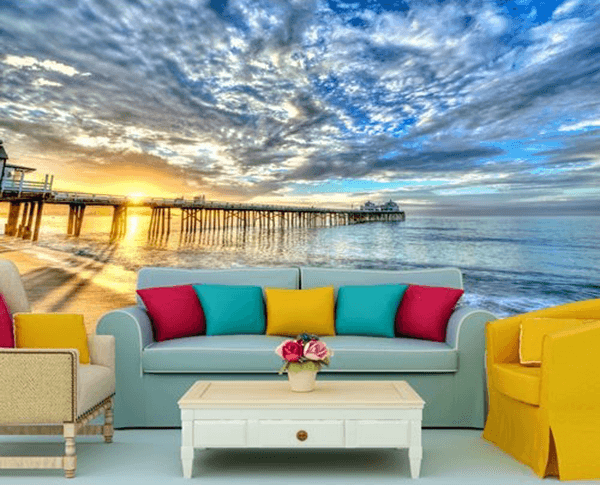
Landscape wallpaper is one of the most versatile choices for a living room because natural scenery can work with many different interior styles.
Forests, mountains, coastlines, countryside views and misty landscapes can bring a sense of openness to a wall. Images with distant horizons or layered scenery are particularly effective when you want the room to appear visually deeper.
A landscape mural does not need to be extremely colorful. Muted scenery with beige, gray, green or soft blue tones can work almost like a large painting and may be easier to combine with furniture over the long term.
When Landscape Wallpaper Works Best
Choose a landscape design when the room feels enclosed, lacks a view or needs a calmer atmosphere. It can also work particularly well behind a large sofa because panoramic scenes tend to continue naturally across a wide wall.
For a relaxed interior, combine a landscape wall mural with natural wood, linen, wool, neutral fabrics and simple furniture.
Landscape Photo Wallpaper
City Wallpaper
City Wallpaper for a Modern Living Room
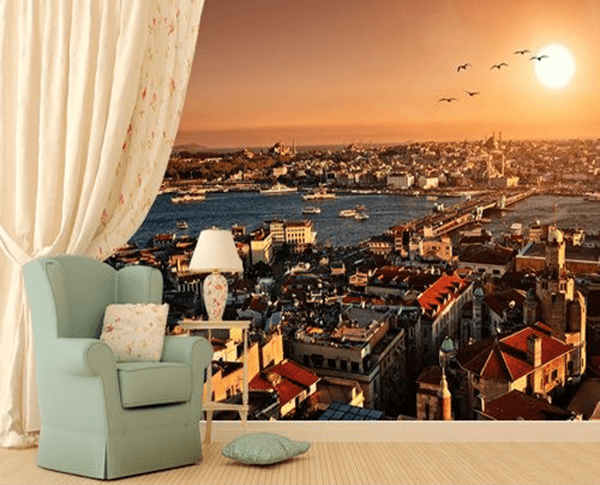
City wallpaper creates a very different atmosphere. Instead of bringing nature indoors, it introduces architecture, streets, skylines and urban perspective.
New York, London, Paris and other recognizable cities are obvious choices, but a city mural does not need to feature a famous landmark. Atmospheric streets, historic buildings, bridges and abstract urban scenes can often be easier to integrate into a living room.
Black and white city wallpaper can work particularly well when the room already contains several colors. It provides architectural detail without adding another strong color palette.
Use Perspective to Create Depth
Street scenes and city views often contain strong perspective lines. A road, corridor of buildings or distant skyline can make the wall appear to continue beyond its actual surface.
This makes city murals useful not only as decoration but also as a way of changing the visual proportions of the room.
For a contemporary living room, pair urban wallpaper with simple furniture, metal details, neutral upholstery and controlled lighting. Too many additional decorative objects can compete with a detailed city scene.
Brick Wallpaper for an Industrial or Rustic Look
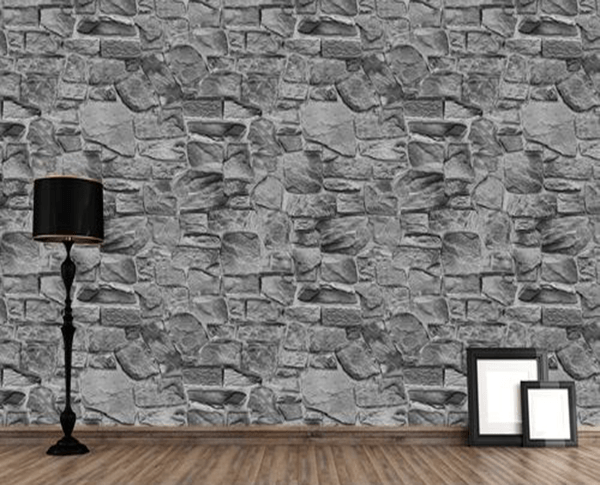
Real brick has character, but adding or exposing brick is not practical in every home. Brick wall wallpaper offers a different approach by creating the visual appearance of masonry on a flat wall.
Red brick creates a warmer and more traditional industrial look. White or light brick can feel more Scandinavian or casual, while gray and dark brick suits contemporary interiors and media walls.
Brick-effect designs are particularly useful behind a sofa, a television, shelving or a simple sideboard because they add texture without requiring another large piece of furniture or wall decoration.
Do Not Overdo the Industrial Theme
If you use brick wallpaper, the rest of the room does not need to look like a warehouse. One textured feature wall may be enough.
Combining brick with softer elements such as fabric sofas, rugs, warm lighting and wooden furniture often creates a more comfortable living room than repeating industrial materials everywhere.
Brick Wall Photo Wallpaper
Art Design Wallpaper

Art and Abstract Wallpaper for Living Rooms
A large wall is an opportunity to use art on a scale that would be difficult to achieve with a framed picture. Abstract wallpaper can introduce shape, movement, texture and color across an entire wall without depending on a recognizable landscape or subject.
This makes it particularly suitable for contemporary living rooms.
Large organic shapes and restrained color palettes can create a calm modern interior, while stronger colors and graphic designs can make the wall the main statement in the room.
If this style suits your space, you can explore our abstract art wallpaper murals for designs ranging from subtle compositions to more expressive wall art.
Treat the Wall Like a Large Artwork
When choosing an art mural, think about the composition in the same way you would choose a painting. Look at where the main shapes will appear in relation to the sofa, television and other furniture.
A beautiful image can lose much of its impact if the most important part disappears behind a tall cabinet.
3D Wallpaper for Living Rooms
3D wallpaper can create a stronger sense of depth by using perspective, shadows and photographic composition. Architectural openings, tunnels, geometric forms, landscapes and window-style views can make a flat surface appear deeper than it really is.
This can be especially effective on a feature wall in a smaller or narrower living room.
It is worth making one distinction clear. Printed 3D wallpaper creates an optical depth effect through the artwork. It is different from physically raised wall panels or textured construction materials.
Choose 3D Designs Carefully
More depth does not automatically mean a better design. A very dramatic perspective can dominate a small room. If your furniture, lighting and accessories are already expressive, a simpler 3D composition may work better.
The most convincing result is usually achieved when the perspective of the image feels appropriate for the wall and viewing distance.
Wallpaper for a Small Living Room
Small living rooms do not need to avoid wallpaper. In fact, the right mural can help the room feel less enclosed.
The key is to choose scale and color carefully.
Use Visual Depth
Landscapes, distant views, architectural openings and perspective-based designs can make the eye travel beyond the physical wall.
Avoid Excessive Small Detail
A very dense image with hundreds of small elements can make a compact space feel visually crowded. Larger shapes and clearer compositions are usually easier on the eye.
Consider Lighter Tones
Soft beige, pale gray, muted green, light blue and other relatively light tones can keep the room feeling open, particularly if natural daylight is limited.
That does not mean dark wallpaper is forbidden in a small room. A dark feature wall can look excellent when the surrounding walls, ceiling and furniture provide enough balance.
Wallpaper for a Large Living Room
A large living room creates a different challenge. An empty wall several meters wide can make normal framed artwork look undersized.
This is where panoramic wall murals become particularly effective. The scale of the artwork can match the scale of the architecture.
Large living rooms can also support stronger colors, wider landscapes and more dramatic designs because there is usually more viewing distance between the wall and the main seating area.
Browse the wider wallpaper for living room collection if you want to compare nature, city, art, brick, 3D and other mural styles in one place.
Wallpaper Behind the Sofa
The wall behind the sofa is one of the most natural locations for a living room mural. The furniture anchors the lower part of the composition while the wallpaper fills the space above it.
When planning this wall, consider the height of the sofa. Important details in the mural should not be positioned so low that they disappear completely behind the backrest.
For a large sofa, wide panoramic images usually feel more balanced than narrow portrait-style compositions.
Do You Still Need Pictures on Top of the Wallpaper?
Not always. A photographic or artistic mural is already a large decorative element. Adding several framed pictures over a detailed design may make the wall unnecessarily busy.
If the wallpaper is very subtle, artwork may still work. If the mural already contains a strong scene or composition, allowing it to stand on its own often creates a cleaner result.
Wallpaper Behind the TV
A television wall requires slightly different thinking because the screen will cover part of the wallpaper.
Choose a design that still makes sense when a large rectangular area is hidden. Textures, landscapes, abstract designs and some 3D compositions work particularly well because their visual interest can continue around the television.
Avoid putting an important face, landmark, flower or other main subject directly behind the screen.
Dark or medium-toned wallpaper can also reduce the strong contrast created by a black television against a completely white wall.
How to Match Wallpaper Colors with Your Living Room
One of the easiest ways to create a coherent room is to identify two or three colors already present in the space.
Look at:
- The sofa and armchairs.
- The flooring.
- Curtains and blinds.
- Rugs.
- Wood tones.
- Metal finishes.
- Cushions and other accessories.
The wallpaper does not need to contain all of these colors. One or two visual connections are usually enough.
Warm Living Rooms
Rooms with oak, walnut, beige, cream, terracotta and warm lighting often work well with earthy landscapes, botanical images, warm abstract art and brick effects.
Cool and Contemporary Living Rooms
Gray, black, white, blue and cooler wood tones can work with city murals, monochrome art, concrete effects and modern 3D designs.
Colorful Living Rooms
If the room already includes several strong colors, use the wallpaper to bring them together rather than introducing many new ones. A mural with a relatively controlled palette can make a colorful interior feel more intentional.
Should Living Room Wallpaper Be Light or Dark?
Both can work. The correct choice depends more on the room than on a general decorating rule.
Light wallpaper tends to reflect more available light and can help a room feel fresh and open. Dark wallpaper creates intimacy and can make a large wall feel more dramatic.
A room with large windows may comfortably handle deep green, charcoal, navy or other dark murals. A north-facing room with limited daylight might benefit from softer tones.
Always think about how the wallpaper will look during both the day and evening. Artificial lighting can significantly change the appearance of color.
Choosing Wallpaper for Different Living Room Styles
Modern Living Room
Try abstract designs, architectural murals, geometric compositions, subtle concrete effects or restrained 3D wallpaper. Simple furniture allows the wall to carry more visual interest.
Scandinavian Living Room
Look for soft landscapes, botanical designs, forests, light abstract forms and muted natural colors. Pale wood and neutral textiles work particularly well with this approach.
Industrial Living Room
Brick, concrete, urban photography and darker city scenes can create character. Balance harder-looking surfaces with comfortable textiles and warm lighting.
Classic Living Room
Elegant landscapes, artistic murals, floral compositions and architectural designs can add detail without making the room feel excessively modern.
Minimalist Living Room
Choose one clear visual idea. Subtle textures, soft abstract forms and tonal landscapes can provide interest while keeping the room calm.
Eclectic Living Room
An eclectic space can support more expressive art, unusual photographs and stronger colors. Even here, it helps to repeat at least one color or material elsewhere in the room so the wallpaper does not feel disconnected.
Made-to-Measure Wallpaper for Living Room Walls
Living room walls rarely have identical proportions. One home may have a long, low wall behind a sectional sofa, while another may have a tall feature wall in an open-plan space.
A made-to-measure mural allows the image to be prepared around the actual width and height of the wall rather than forcing the wall to fit a fixed-size print.
This is particularly important with photographic wallpaper because cropping changes the composition. A panoramic image designed for a wide wall may need a different crop when used on a more square surface.
Measure the Wall, Not the Furniture
Measure the complete width and height of the area you intend to cover. Do not calculate the mural size from the sofa or television dimensions.
If the wall contains doors, windows or architectural features, consider how they will interact with the image before choosing the final composition.
Can You Use Your Own Photograph in the Living Room?
Yes. A personal photograph can make a living room feature wall completely unique. Travel photography, landscapes, architecture and original artwork are especially suitable when the image has enough resolution and a composition that works at large scale.
The fact that a photograph looks sharp on a phone does not automatically mean it is suitable for an entire wall. Large-format printing demands much more image information.
If you have your own image, the create your own photo wallpaper option allows a personal photograph or artwork to be used for a custom wall mural.
Common Living Room Wallpaper Mistakes
Choosing the Wallpaper Before Considering the Room
A beautiful wallpaper can still be wrong for a particular interior. Look at the furniture, flooring, wall dimensions and lighting before making the final choice.
Using a Design with the Wrong Scale
A small preview on a website can be misleading. Remember that the final artwork may cover several square meters. Small details become much larger on the wall.
Making Every Element a Focal Point
If the wallpaper is dramatic, the sofa, rug, curtains, artwork and lighting do not all need to compete for attention. A successful room usually has a visual hierarchy.
Ignoring Image Cropping
Different wall proportions require different crops. Check which parts of the design will remain visible before ordering.
Following a Trend Without Considering Your Own Style
Living room wallpaper is a large visual element. Choose something you would genuinely enjoy living with rather than selecting a design only because it appears frequently in current interiors.
Living Room Wallpaper Ideas at a Glance
| If Your Living Room Needs... | Consider... |
|---|---|
| More visual space | Landscape, perspective or 3D wallpaper |
| More warmth | Nature, floral, brick or warm abstract designs |
| A modern focal point | Abstract art, architecture or geometric murals |
| An industrial character | Brick, concrete or city wallpaper |
| A calmer atmosphere | Muted landscapes, botanical designs or soft abstract art |
| A dramatic statement | Large-scale art, dark murals or strong 3D designs |
Frequently Asked Questions About Living Room Wallpaper
What type of wallpaper is best for a living room?
The best wallpaper depends on the room and the effect you want to create. Landscapes are useful for a calm and spacious feeling, abstract murals suit modern interiors, brick designs add texture and 3D wallpaper can create visual depth.
Which wall should I wallpaper in the living room?
The wall behind the sofa, television or another natural focal point is usually a good choice. Ideally, choose a wall that is visible when entering the room and is not heavily interrupted by doors or large pieces of furniture.
Can wallpaper make a small living room look bigger?
Some designs can make a small living room feel visually more open. Murals with perspective, distant landscapes and architectural depth can encourage the eye to look beyond the flat wall. Lighter colors can also help in rooms with limited daylight.
Can I use dark wallpaper in a living room?
Yes. Dark wallpaper can create a sophisticated and intimate atmosphere, particularly in rooms with good natural or artificial lighting. It can also work well behind a television or light-colored sofa.
Is a feature wall still a good idea for a living room?
A feature wall is useful when there is a clear reason for it. Rather than adding wallpaper to one wall at random, choose a natural focal point and use the mural to strengthen the layout of the room.
Should wallpaper match the sofa?
It should coordinate with the sofa, but it does not need to match it exactly. Repeating one or two related colors usually creates a more natural interior than using exactly the same shade everywhere.
Is 3D wallpaper suitable for a living room?
Yes. 3D wallpaper is particularly effective on feature walls where perspective and visual depth can be seen clearly. The design should still suit the scale, furniture and overall style of the room.
Make the Wallpaper Part of the Whole Living Room
The strongest living room wallpaper designs do more than fill an empty wall. They help connect the furniture, colors, lighting and architecture of the room.
A landscape mural can make the space feel calmer and more open. City wallpaper can add an urban character. Brick designs introduce texture, while abstract art can turn the wall into a large decorative composition. A well-chosen 3D mural can completely change the perception of depth.
There is no need to choose the boldest wallpaper in the collection. Start with your room, decide what the wall needs and then look for a design that solves that particular problem.
When the scale, colors and composition work with the furniture rather than against it, wallpaper can become one of the elements that brings the entire living room together.